

Error: Contact form not found.
The greatest living authors have changed how readers understand history, identity, relationships, and the world around them. Their books cross national borders, challenge familiar storytelling methods, and continue to influence modern literature.
Writers such as Margaret Atwood, Salman Rushdie, Kazuo Ishiguro, Han Kang, and Anne Carson have earned international recognition through their distinctive work. Others, including Stephen King and N. K. Jemisin, have helped bring genre fiction to wider audiences.
This selection introduces 15 influential living writers, explains their contributions, and recommends books for readers discovering their work. It is an editorial selection rather than a definitive ranking.
Literary greatness cannot be measured by book sales or awards alone. Some writers become influential through unusual storytelling methods, while others change how familiar subjects are presented.
The authors featured here were selected using four considerations:
The selection includes Nobel Prize winners, award-winning novelists, poets, and writers whose work reaches beyond traditional literary fiction.
1. Margaret Atwood — Fiction That Questions Power and Freedom
Notable books: The Handmaid’s Tale, The Blind Assassin, The Testaments
Canadian author Margaret Atwood is widely recognized for fiction that examines power, gender, environmental concerns, and individual freedom.
Her novel The Handmaid’s Tale presents a society where political and religious authority controls women’s lives. Its themes have remained relevant to discussions about personal rights and government power.
Atwood also experiments with narrative structure. The Blind Assassin, which won the Booker Prize in 2000, combines personal history with stories nested inside other stories.
For new readers, The Handmaid’s Tale offers an accessible introduction to her political and speculative fiction.
2. Salman Rushdie — History, Myth, and Imagination
Notable books: Midnight’s Children, The Satanic Verses, The Moor’s Last Sigh
Salman Rushdie helped reshape contemporary English-language fiction through his imaginative treatment of history and identity.
His 1981 Booker Prize-winning novel Midnight’s Children follows a character born at the moment of India’s independence. The narrative connects his extraordinary life with the country’s political transformation.
Rushdie frequently combines historical events, mythology, satire, and fantastic elements. His writing asks how personal memory and national history influence one another.
Readers interested in ambitious storytelling and postcolonial literature should consider Midnight’s Children, although its layered narrative requires attention.
3. Kazuo Ishiguro — Memory, Regret, and Human Identity
Notable books: The Remains of the Day, Never Let Me Go, Klara and the Sun
British novelist Kazuo Ishiguro, who received the 2017 Nobel Prize in Literature, is known for emotionally restrained storytelling.
His characters often misunderstand their own experiences or recognize important truths too late.
In The Remains of the Day, an English butler reflects on decades of service and the personal choices he avoided. Never Let Me Go uses speculative fiction to consider mortality, love, and the treatment of human beings.
Ishiguro’s restrained prose demonstrates how quiet conversations and incomplete memories can carry considerable emotional force.
4. Haruki Murakami — The Extraordinary Within Ordinary Life
Notable books: Norwegian Wood, Kafka on the Shore, 1Q84
Japanese novelist Haruki Murakami creates stories where ordinary circumstances gradually become strange or unsettling.
His fiction frequently includes music, loneliness, dreams, mysterious encounters, and uncertain boundaries between reality and imagination.
Norwegian Wood explores relationships and grief through a relatively realistic narrative. By contrast, Kafka on the Shore introduces unusual events that resist straightforward explanations.
Murakami’s international readership reflects the appeal of stories that combine emotional isolation with imaginative possibilities.
Readers new to his work may find Norwegian Wood easier to approach before exploring his more experimental novels.
5. Anne Carson — Poetry That Reimagines Ancient Literature
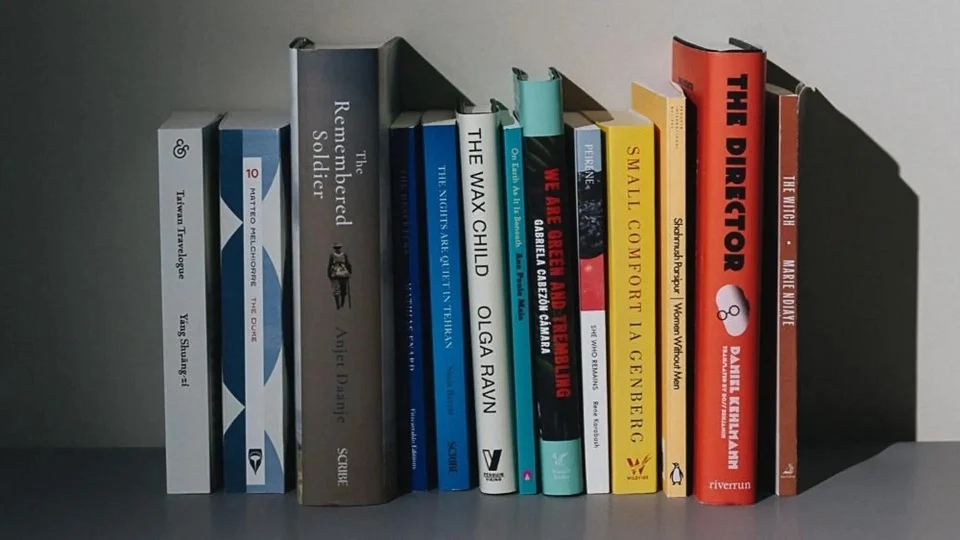
Notable books: Autobiography of Red, Eros the Bittersweet, The Beauty of the Husband
Canadian poet, essayist, translator, and classicist Anne Carson challenges conventional distinctions between poetry, fiction, scholarship, and dramatic writing.
In October 2026, she received the Nobel Prize in Literature for her inventive approach to literary forms and classical traditions.
Her book Autobiography of Red reimagines material from ancient Greek mythology through a modern poetic narrative.
Rather than treating classical literature as something distant, Carson uses it to examine love, desire, loss, and human relationships.
Her work is particularly rewarding for readers interested in experimental poetry and the relationship between ancient and contemporary writing.
6. Han Kang — Literature About Trauma and Human Fragility
Notable books: The Vegetarian, Human Acts, We Do Not Part
South Korean author Han Kang received the 2024 Nobel Prize in Literature.
Her writing often confronts violence, historical trauma, bodily autonomy, and the difficult relationship between memory and suffering.
The Vegetarian follows a woman whose decision to stop eating meat exposes tensions within her family and society. Human Acts examines the human consequences of political violence surrounding the 1980 Gwangju uprising.
Han Kang uses precise language and emotionally demanding situations without relying on conventional dramatic explanations.
Readers can learn more about her career through the official Nobel Prize profile.
7. Olga Tokarczuk — Stories That Cross Borders
Notable books: Flights, Drive Your Plow Over the Bones of the Dead, The Books of Jacob
Polish novelist Olga Tokarczuk received the 2018 Nobel Prize in Literature.
Her work frequently challenges fixed ideas about nationality, identity, geography, and historical truth.
Flights moves between different characters, locations, and reflections rather than following one traditional plot. The Books of Jacob uses historical fiction to examine religion, power, and cultural connections.
Tokarczuk’s writing encourages readers to question whether a single viewpoint can explain a complicated society.
For an introduction to her unusual storytelling approach, Drive Your Plow Over the Bones of the Dead offers mystery alongside philosophical questions.
8. Annie Ernaux — Personal Memory as Social History
Notable books: The Years, A Man’s Place, Happening
French author Annie Ernaux received the 2022 Nobel Prize in Literature.
Her autobiographical writing examines how social class, education, gender, and family background shape personal experience.
In The Years, Ernaux connects individual memories with broader changes in French society. Rather than presenting her life as an isolated story, she considers how shared experiences influence identity.
Her direct language also distinguishes her writing from more decorative literary styles.
Ernaux shows that ordinary moments can reveal larger social realities. Readers interested in memoir, social history, and personal identity will find her work especially relevant.
9. Chimamanda Ngozi Adichie — Identity, Migration, and Belonging
Notable books: Half of a Yellow Sun, Americanah, Dream Count
Nigerian author Chimamanda Ngozi Adichie writes about family, politics, relationships, migration, and cultural identity.
Half of a Yellow Sun examines the Nigerian Civil War through the lives of several connected characters.
In Americanah, Adichie explores race, immigration, and belonging through the experiences of a Nigerian woman who moves to the United States.
Her 2025 novel Dream Count continues her interest in women’s lives and complicated relationships.
Adichie’s fiction connects intimate personal experiences with social and political circumstances, making her work meaningful to readers across different cultures.
10. Zadie Smith — Modern Society Through Complex Characters
Notable books: White Teeth, On Beauty, NW
British novelist Zadie Smith became internationally recognized with her debut novel White Teeth.
Her fiction frequently examines multicultural communities, social class, family relationships, race, and competing personal values.
White Teeth follows interconnected families whose experiences reflect social changes in modern Britain. On Beauty considers intellectual disagreements, family conflict, and cultural expectations.
Smith often combines humor with serious observations about human behavior.
Her characters are rarely simple examples of right or wrong. Instead, their contradictions make them convincing and memorable.
11. Louise Erdrich — Indigenous History and Family Stories
Notable books: Love Medicine, The Round House, The Night Watchman
American novelist Louise Erdrich, a member of the Turtle Mountain Band of Chippewa, writes extensively about Indigenous families, communities, and history.
Her stories frequently examine the connections between generations and the consequences of political and social injustice.
The Round House won the 2012 National Book Award for Fiction. The novel follows a young boy seeking answers after violence disrupts his family.
The Night Watchman, which received the Pulitzer Prize for Fiction, draws on historical struggles involving Native American rights.
Erdrich’s writing preserves distinct community perspectives while examining questions of identity and belonging.
12. Marilynne Robinson — Faith, Family, and Moral Responsibility
Notable books: Gilead, Housekeeping, Lila
American novelist Marilynne Robinson is known for thoughtful writing about spirituality, personal responsibility, and family relationships.
Her Pulitzer Prize-winning novel Gilead takes the form of a letter from an aging minister to his young son.
Through reflections on ordinary experiences, Robinson examines forgiveness, regret, and the complicated nature of human relationships.
Her earlier novel Housekeeping explores loss and unconventional family life.
Robinson’s fiction often moves slowly, but its emotional strength comes from careful observations rather than dramatic plot twists.
Readers who appreciate reflective prose may find Gilead especially rewarding.
13. Colson Whitehead — American History Through Inventive Fiction
Notable books: The Underground Railroad, The Nickel Boys, Harlem Shuffle
American writer Colson Whitehead explores racial injustice, American history, identity, and social institutions through varied fictional approaches.
The Underground Railroad transforms the historical escape network into a literal railroad, combining a historical subject with an imaginative premise.
The novel received the 2016 National Book Award for Fiction and the Pulitzer Prize.
The Nickel Boys draws on the history of abusive reform schools to examine institutional violence and injustice.
Whitehead’s ability to move between historical fiction, literary experimentation, and crime narratives makes his work distinctive among contemporary American novelists.
14. N. K. Jemisin — Fantasy That Challenges Social Systems
Notable books: The Fifth Season, The Obelisk Gate, The Stone Sky
American fantasy author N. K. Jemisin has expanded expectations about what modern speculative fiction can examine.
Her Broken Earth trilogy takes place in a world threatened by catastrophic geological events and shaped by oppressive social structures.
The books connect environmental danger with questions about power, discrimination, family, and survival.
Jemisin has received major science fiction and fantasy awards, and the Science Fiction and Fantasy Writers Association named her a Grand Master in 2025.
Her work demonstrates how invented worlds can address recognizable human problems without losing the imaginative appeal of fantasy.
15. Stephen King — Horror With Lasting Cultural Influence
Notable books: The Shining, It, The Stand, 11/22/63
American novelist Stephen King has influenced modern horror, suspense, and popular storytelling for decades.
His books frequently place ordinary characters in frightening situations, then examine how fear changes their decisions and relationships.
The Shining explores isolation and psychological decline through a supernatural story. It connects childhood fears with lasting emotional experiences.
King has also written outside conventional horror, including the historical time-travel novel 11/22/63.
His broad readership and extensive body of work demonstrate that genre fiction can leave a substantial cultural mark.

The right starting point depends on the stories and subjects you enjoy.
Reading Interest | Recommended Author | Starting Book |
Dystopian fiction | Margaret Atwood | The Handmaid’s Tale |
Historical and political fiction | Salman Rushdie | Midnight’s Children |
Emotional literary fiction | Kazuo Ishiguro | Never Let Me Go |
Surreal fiction | Haruki Murakami | Kafka on the Shore |
Short autobiographical writing | Annie Ernaux | A Man’s Place |
Modern fantasy | N. K. Jemisin | The Fifth Season |
Horror and suspense | Stephen King | The Shining |
Readers looking for something unfamiliar might begin with Anne Carson’s Autobiography of Red or Han Kang’s The Vegetarian. Both offer experiences that differ from a conventional realistic novel.
These writers demonstrate that there is no single formula for producing meaningful literature.
Ishiguro creates emotional depth through restraint, while Rushdie often uses elaborate language and layered narratives. Ernaux favors direct autobiographical expression, whereas Jemisin constructs fictional worlds to examine social questions.
Their work offers several practical lessons.
First, a clear perspective matters more than copying a fashionable writing style. Second, characters become memorable when their choices have believable consequences. Third, structure should support the story rather than follow a rigid template.
However, developing an original idea into a finished manuscript can be challenging for new writers. Some authors work independently, while others seek professional assistance through Ebook Writing Services to help develop their ideas into structured manuscripts.
Length also depends on the project. Understanding the average word count of a book can help aspiring novelists plan a manuscript, but successful books differ considerably in length and structure.
After completing a manuscript, writers should review their work carefully before publication. Professional Book Proofreading Services can help identify spelling, grammar, and punctuation errors that may remain after earlier revisions.
Most importantly, writers can learn from established authors without imitating their voices. Studying how a story creates meaning is more useful than reproducing its sentences.
The greatest living authors do not all write in the same genre or share the same literary values.
Some examine history through personal memories. Others create imagined worlds, challenge political authority, or give familiar experiences unexpected meaning.
Margaret Atwood, Salman Rushdie, Han Kang, Anne Carson, and the other writers featured here represent different approaches to contemporary literature.
For readers, the best starting point is a subject that genuinely interests them. From there, exploring unfamiliar authors can lead to new perspectives on storytelling, society, and human experience.

BakeMyBook empowers authors and publishers with our specialized book crafting services for the most extraordinary literary outcome. We have the best tools, software, and competent professionals that collaborate with the client leading to quality output.
Copyright © 2025 BAKEMYBOOK INC.
All Rights Reserved.
